


Tuesday 29th September 2026
9am – 5pm (registration 9-9.30am)
Crowne Plaza Hotel Birmingham NEC
The FES Clinician Forum is an opportunity to hear and discuss the latest developments in clinical FES.
Who is the day for?
- Established FES clinicians
- New FES clinicians
- Clinicians considering training and setting up to offer FES treatment
- Researchers
The aim of the meeting is to promote discussion and the exchange of ideas in an informal setting.
Registration – from 9am
Presentations – from 9.30am
| Timings | Presentation | Speaker | Organisation |
| 9:30 | Introduction, Updates, Patient Survey and STEPS II | Paul Taylor | Odstock Medical Ltd |
| 10:00 | A most unusual PD gait pattern transformed with FES: A retrospective case reflection | Helen Evans | University Hospitals of Derby and Burton NHS Foundation Trust |
| 10:15 | Implementation of a Functional Electrical Stimulation Service in North Wales | Leanne Parry, Lucy Tilling | Betsi Cadwaladr University Health Board |
| 10:30 | The MoFit project. The use of FES to improve gait symmetry and reduce pain following below knee amputation | Christine Singleton | The West Midlands Rehabilitation Centre, Birmingham |
| 10:45 | Experiences of walking with Functional Electrical Stimulation (FES) over time | Natalie Clarke | UCL |
| 11:00 | Break | ||
| 11:30 | Functional Electrical Stimulation for walking in adults with Hereditary Spastic Paraplegia: a service evaluation
|
Jon Kirkbride | Odstock Medical Ltd |
| 11:45 | An introduction to IFESSUKI. The International FES Society UK and Ireland Chapter | Christine Singleton | Chair of The International FES Society UK and Ireland Chapter |
| 12:00 | A case study using FES in an unclear diagnosis
|
Eve Harling | The Robert Jones and Agnes Hunt Orthopaedic Hospital, Oswestry |
| 12:15 | Hybrid approach with hip flexion robotics | Becky Duncan | Odstock Medical Ltd |
| 12:30 | Combining functional electrical stimulation and transcutaneous spinal cord stimulation to improve walking function in people with multiple sclerosis. | Farhat Naz | Post Graduate Researcher
Bournemouth University
|
| 12:45-12:50 | Close morning session |
Buffet Lunch, Networking and Posters 12:50-2pm
Workshops from 2pm – 5pm
The meeting is £65.00 and includes a buffet lunch and refreshments. An invoice will be sent upon receipt of your registration form. Your place will be confirmed once payment has been received.
Afternoon workshops
The afternoon of this event will be dedicated to workshops. You will be able to choose 2 workshops from the options below. Each workshop is 1hr 15 mins long.
You should have received an email to make your workshop selection. Please contact rachel.proctor@odstockmedical.com with any questions.
Workshop timings:
Session 1: 2.00 – 3.15pm
Session 2: 3.30 – 4.45pm
The practical sessions will include hands-on use of FES so come dressed for FES!
From your registration feedback we will offer 4 workshops.
Introduction to the ODFS Pace X2 (Sessions 1 & 2 i.e. run twice)
Hands on workshop where the use of the new two channel stimulator will be taught. Participants will set the device up on themselves for applications such as dorsiflexion with knee extension, bilateral dorsiflexion or dorsiflexion with knee flexion.
Paediatric FES networking event (Session 1 only)
This session aims to bring together physios working with FES to treat children. Best practice will be discussed and case studies presented. There will be a discussion about establishing a special interest group for this topic.
Upper limb FES: Identifying the right muscle and practising functional tasks (Sessions 1 & 2 i.e. run twice)
This hands-on workshop will review FES techniques used in the upper limb in the treatment of stroke, tetraplegia, TBI and CP. Techniques to use FES in practising functional tasks will be explored. Participants will practise FES techniques on each other.
Dropped Foot setup revision session (Session 2 only)
This hands-on workshop will be a revision section for the application of FES for dropped foot. We will cover electrode positions, the fine-tuning of parameters and practical problem solving. The session is aimed at clinicians who have completed the OML lower limb FES course but have not yet had sufficient experience to gain confidence in the technique.
To reserve your place please click here for the registration form
Please click here to view our video from our 2025 event
To view presentations and agenda from past FES Clinician Forums please click here
Speakers’ Information
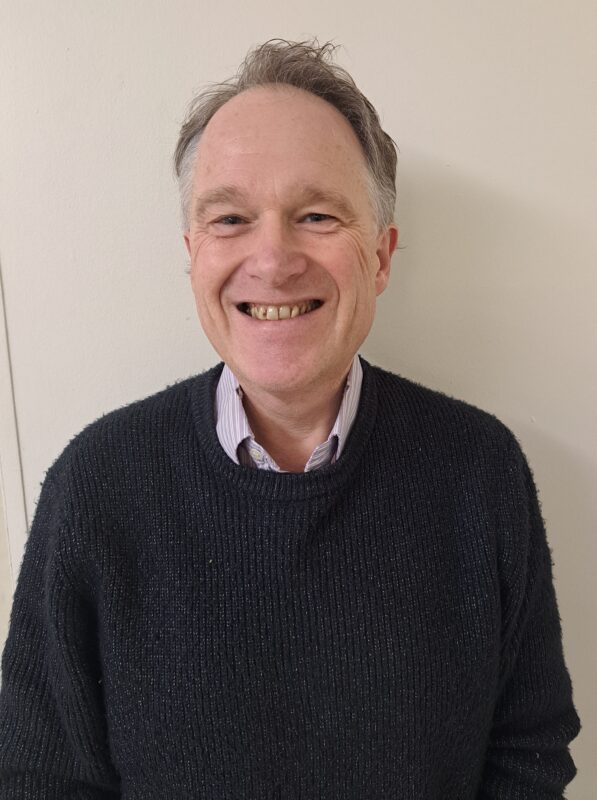
Paul Taylor is Head of Research at the National Clinical FES Centre at Salisbury District Hospital, UK and visiting professor at Bournemouth University, Faculty of Health and Social Science. He is also co-founder and Clinical Director of Odstock Medical Limited, the NHS owned company set up by Salisbury NHS Foundation Trust to develop FES devices and clinical services. He is a Biomedical Engineer specialising in Functional Electrical stimulation (FES). His main area of work has been the development, clinical testing and service delivery for FES systems used to assist gait for people with dropped foot due to multiple sclerosis, stroke, spinal cord injury, Parkinson’s and other neurological conditions. He also has an interest in developing and accessing systems for upper limb training in stroke and spinal cord injury.
Christine Singleton
MSc, HCP, MCSP, OCPPP
Consultant Physiotherapist (FES)
President of International FES Society UK & Ireland Chapter (2025 – present)
Consultant Physio (FES) & Service Lead for Functional Electrical Stimulation (FES) clinic (1995 – present) providing treatment for 1700s of patients with long term neurological conditions
Active researcher into the use of FES for neurological patients (1995 – present) and author/co author of peer reviewed publications and Guidelines
Clinical Lead for the West Midlands Rehabilitation Services 2008-2012
A member of the steering group delivering the National MS audits (2006, 2008 & 2011) and Clinical Guidelines for FES (2021-22). Project Manager for West Midlands Spasticity Network 2004-14
Educate and support clinicians nationally and present on FES at the World Conferences
Founder member of Therapists in Multiple Sclerosis (TiMS) in 2004 and FES Applications in Rehabilitation FESAiR in 2005 – an international partnership
Lecturer/trainer and Clinical Lead for the Regional FES clinic at the West Midlands Rehabilitation Centre (B’ham) since 2002
Masters degree in Healthcare Sciences – Research (B’ham 2002)
Clinical experience in the field of neurology since 1990 establishing FES clinics in Birmingham UK in 1995 & 2002.
Qualified Chartered Physiotherapist (UK- 1982)
Helen Evans ((BSc)Hons), PhD)
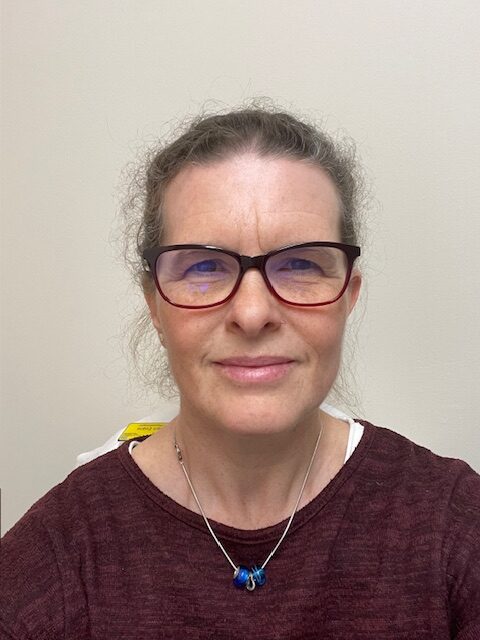
Specialist Physiotherapist / Team Leader
Derby Gait and FES Service
United Hospitals of Derby and Burton NHS Foundation Trust
I am a physiotherapist who has worked for 25 years in the field of gait analysis working in two different clinical gait laboratories. I am currently the team leader and lead physiotherapist within the Derby Gait and FES Service, and we have been running an FES service for the past 13 years. My PhD is in the field of Orthotic use in Cerebral Palsy.
We currently have around 185 patients in our FES caseload and are involved in the STEPS II study.
Lucy Tilling
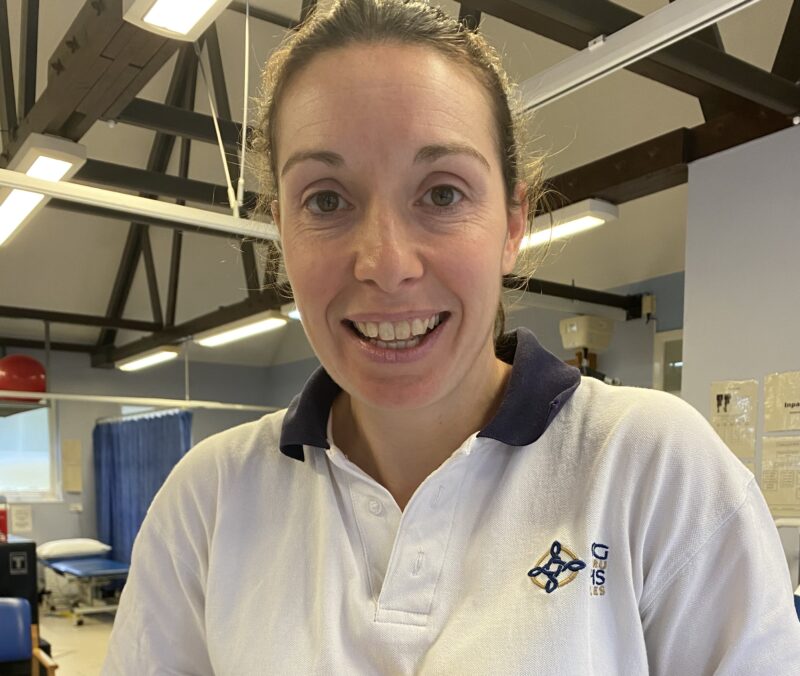
Clinical Specialist Physiotherapist working in Neurology across the Wrexham and Flintshire area of North Wales. I Qualified from the University of Liverpool in 2009 and have been specialising in neuro for 10 years. I have recently been involved in setting up and delivering an FES service and was also an FES practitioner on the recent STEPS II study.
Natalie Clarke
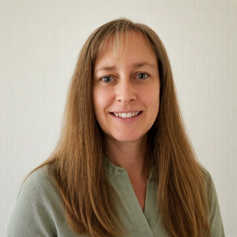
Natalie Clarke qualified as a physiotherapist at James Cook University in Australia and has worked in neurological rehabilitation for over ten years. Her career has included six years in a private rehabilitation centre, alongside roles within the NHS, before moving into community-based practice.
Natalie is passionate about helping people with neurological conditions remain as independent as possible and continue doing the things that matter to them. She has a particular interest in functional electrical stimulation (FES), especially its use following stroke and traumatic brain injury. For Natalie, FES is not simply about improving movement, but about what that movement can make possible in someone’s everyday life.
Natalie is currently completing her MSc at University College London (UCL). Her research explores the experiences of people who use FES for foot drop, including its benefits, challenges and impact on everyday life. This reflects her belief that clinical outcomes only tell part of the story and that listening to the people who use FES every day is just as important.
Becky Duncan
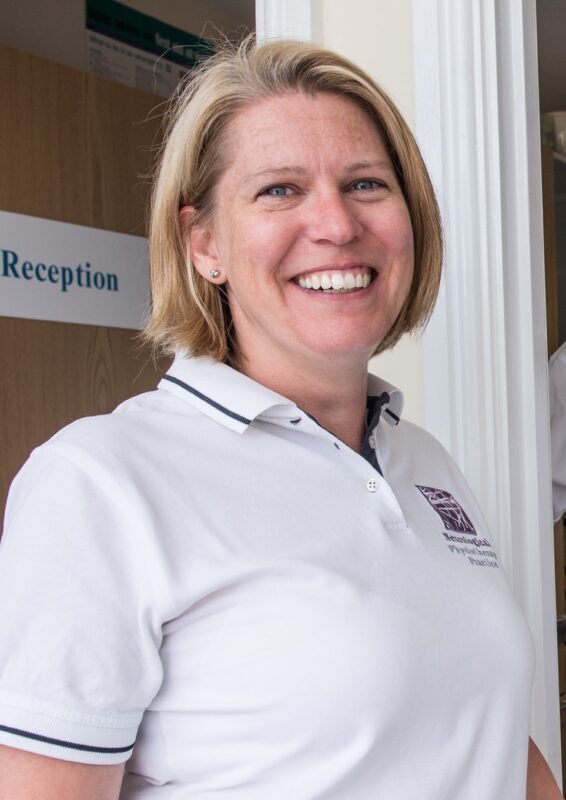
Becky has worked as a Specialist Neurological Physiotherapist for nearly 30 years and has a wealth of knowledge and experience in Neurorehabilitation. She set up Physio Practice Cornwall in 2010 and has worked closely with the NHS to provide the commissioned Functional Electrical Stimulation Outreach Clinic in Cornwall on behalf of the National FES Centre. Becky also works as a Field Physiotherapist for Odstock Medical Limited, supporting FES services throughout the UK.